

Conscience and Desire Were Never Opposites
Maria McManus does everything the hard way so you can do nothing at all.


Maria McManus is the Dublin-born, New York–based designer who spent the better part of two decades merchandising for other people, rag & bone and Tory Burch among them, before she launched her own line in 2020. The pedigree matters because she knows exactly how a garment is made and what it costs the planet to make it, and she built her entire eponymous brand around that knowledge.
The founding principle is almost aggressive in its plainness: use less water, fewer chemicals, less waste. Everything follows from there: her cashmere is recycled, spun in Italy from old sweaters collected around the world, because she won’t buy virgin cashmere while overgrazing turns Mongolian grassland to desert. The cotton is GOTS-certified organic. Even the buttons are corozo, a tagua palm nut they call vegetable ivory, chosen partly because keeping the palm valuable keeps the forest standing. Everyone who touches the clothes is paid a living wage.
What saves Maria’s line from being a lecture is that the clothes are beautiful. The ease is supreme.
But consider the kind of person it takes to build this! She had the résumé to make beautiful clothes the easy way, fast and untraceable, and she chose the opposite. At the start she held herself to near-total certification on every material, then admitted to me that the rule was strangling the femininity out of the work, so she loosened it to ninety percent and let the craft back in. That is not a marketing position! That is a woman arguing with herself in public about how good is good enough.
The legging she would force into every closet is spun from a fruit-based polymer built to break down in five years instead of haunting the earth as microplastic for a thousand. The crochet is made by a collective of women in Bolivia. She is working from somewhere older and stranger than a trend report. Ethics is friction. It is slower and more expensive at every step, and she keeps adding more of it on purpose, somewhere between raising two teenagers and reading about the climate before the rest of us are up.
And she is not doing it alone, which is the part that genuinely thrills me. There is a cluster of women in New York right now turning a ship that does not want to turn, Zero + Maria Cornejo and Gabriela Hearst working the same waters, designers who reject the idea that conscience and desire were ever opposites. It matters that this is happening here.
Maria keeps a kind of altar to the Helmut Lang archive, the place she goes back to when she needs to remember what she is doing, and the lineage is exactly right: raw and minimal, the New York she actually comes from. For most of my life the most thrilling clothes were made in Paris and the most responsible ones were made in a hemp poncho. Neither is true now. The center of gravity moved downtown and it is female, and I cannot remember the last time it felt this alive to get dressed in this city.


Jess Graves: How has your design ethos or approach evolved since starting your own label?
Maria McManus: My design ethos has certainly evolved since starting the collection over the past 5 to 6 years, mostly influenced by a broader progress in sustainable materials. When I began, people were talking a lot about sustainability, but material development in organic, recycled, and sustainably-farmed materials was still quite rudimentary. I also set very strict parameters for myself, aiming for 100% of materials to be certified organic, recycled, or sustainably farmed. That rigor was important in establishing a foundation, but over time I realized it was actually stunting creativity and femininity within the collection.
Today, with so much more innovation and development in responsible materials, I’ve been able to naturally integrate more interesting, sustainable materials. But also I have become more comfortable working within a framework that is 90% certified as sustainable - prioritizing biodegradability and avoiding synthetic fibers like polyester and nylon as much as physically possible.
This evolution has also opened the door to a deeper engagement with craft. I’ve been incorporating hand-crocheted elements created by a collective of female artisans in Bolivia, as well as working with exceptional French lace from Dentelle de Calais-Caudry. I think these materials carry history and a more human touch to my clothing - qualities that feel essential to creating something truly covetable and long lasting.

JG: Are there any non-fashion inspirations - outside of clothing and textiles - that have influenced your work recently?
MM: My friends have great taste, so the women I’m surrounded by are a constant source of inspiration. I also often return to my Irish roots when designing a collection – poets like Seamus Heaney and singers like Sinéad O’Connor both informed my FW26 collection. Sinéad, in particular, embodied an extraordinary dichotomy and a fearless approach to collaboration, working with artists as varied as Massive Attack and more traditional Irish folk bands like The Chieftains.
Seamus Heaney’s writing carries a deep awareness of place, heritage, and the quiet power of the everyday. That sensitivity to landscape and lineage encourages how I think about simplicity in design and craft – something that holds an aesthetic while evolving gently over time.
JG: What’s a recent discovery (artist, place, object) that’s made an impact on you?
MM: Recently I traveled with my family to Puerto Escondido and stayed near Casa Wabi. It was a magical experience. The Tadao Ando-designed gallery, home and gardens are an incredible merging of nature with art, architecture and Mexican culture. From our cabana on the beach we could whale watch every morning and although restaurants were limited the quality of food was outstanding. All of the neighboring architecture and landscaping felt deeply aligned with nature, sustainability and a respect for doing less, with greater care.
JG: How would you describe your design ethos? If someone raided your closet, what story would they piece together about your life?
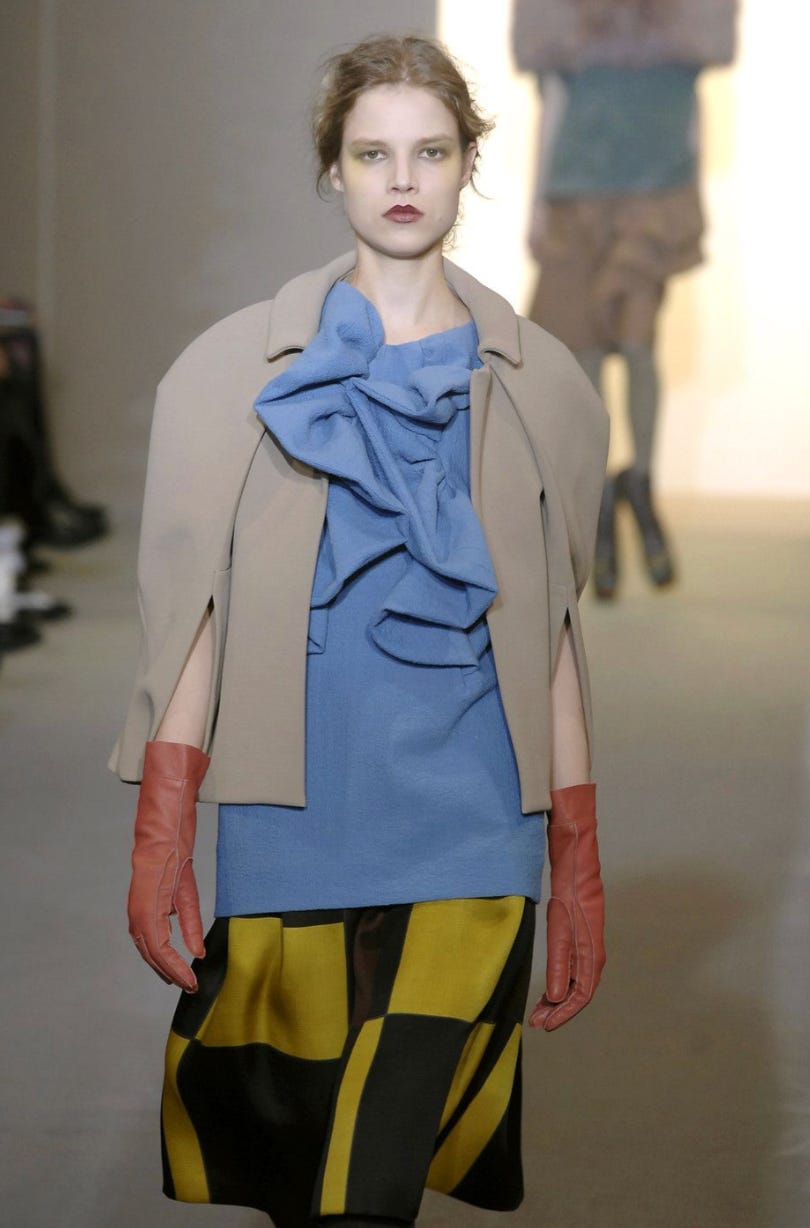
Maria McManus: If someone were to raid my closet they would not be surprised to find several pieces from old Céline, Lemaire, Jil Sander, and The Row, but they would probably be very surprised to find weird and wonderful shapes and crazy color and print from Consuelo Castiglioni’s time at Marni—it has never been the same since her departure.
JG: What made you want to collaborate with AGOLDE? Was it instant chemistry or a shared question you both felt needed answering?
MM: Working with Karen and the entire AGOLDE team on this collaboration has been incredible. We first met last spring in LA and immediately recognized the synergy between each other and our two brands, both from an aesthetic perspective but more specifically around sustainability and responsible consumption. I remain so impressed by AGOLDE’s commitment to creating the most sustainable and responsible denim through their partnerships with regenerative cotton farms and their use of biodegradable stretch and recycled leather. We custom-made every piece of hardware, every label, and every hang tag, and worked tirelessly with Karen’s team to perfect each fit and wash.

JG: Tell us about this capsule — what is the entry point? What should everyone be eyeing first?
MM: Karen and I began this collaboration with shared reference points: the spare, intelligent minimalism of Craig McDean’s early work for Jil Sander and his stripped-back images of Kate Moss for Calvin Klein. Those photographs - direct, unembellished, and quietly sexy - set the tone. From there, we built a small and precise wardrobe of essentials: a jean, a skirt, a shirt, a jacket. The foundation is pragmatic and considered, but with moments of irreverence - an acid-wash corset jean, a powder-pink oversized denim shirt - that interrupt the purity just enough to make it feel modern.
My first purchase will be the regenerative cotton skater shorts in white, styled with the black Naia sateen cami and the washed pale-blue barn jacket finished with a recycled leather collar.
JG: If you could force one item into everyone’s closet, what would it be?
MM: If I could force everyone to buy one item right now, it would be our biodegradable legging and capri made from fruit-based polymers. Unlike conventional synthetics derived from the fossil fuel industry – which will stay on the earth in the form of micro plastics for thousands of years and are likely having very harmful effects on our health – this material is designed to biodegrade within five years. It is a small, stylish choice that meaningfully reduces long-term environmental impact.
JG: What’s a garment detail you’ll never get over, like a personal kink?
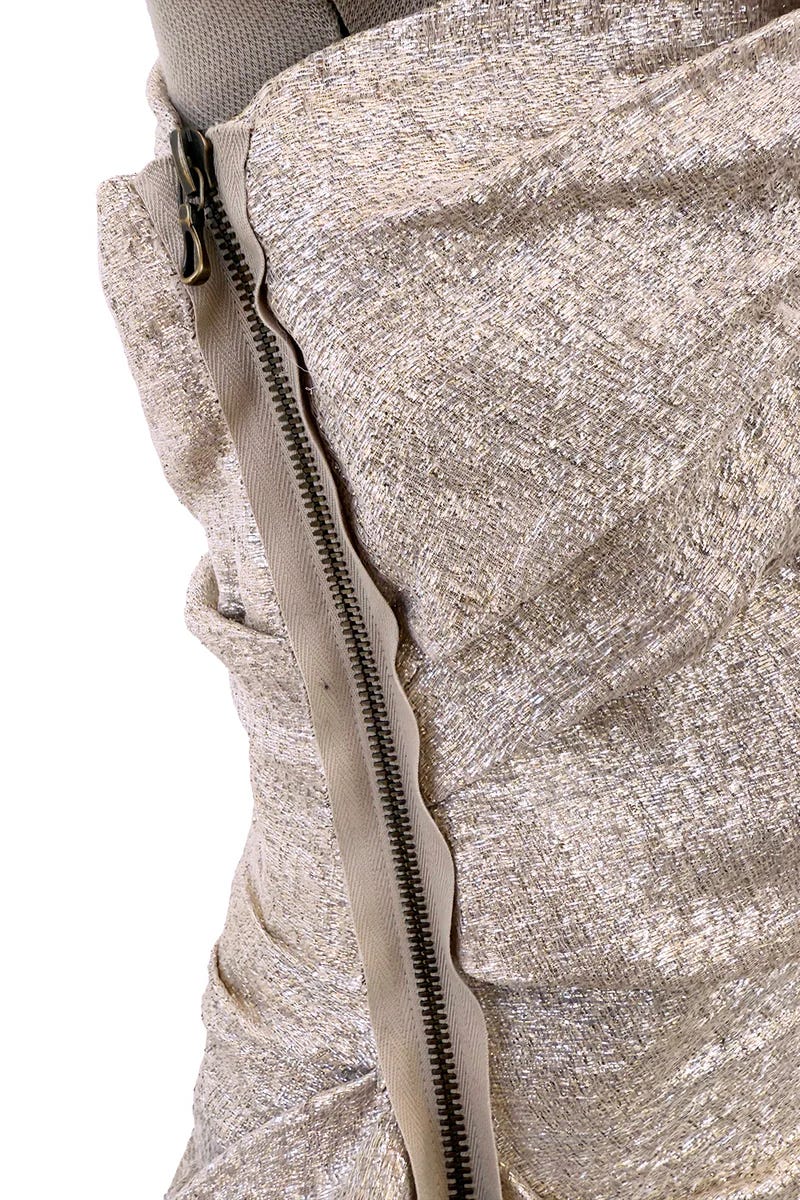
MM: I love an exposed zipper done in the right way, specifically the grosgrain ribbon zipper detailing that defined so many of Alber Elbaz’s dresses for Lanvin. Years ago, I bought one of those dresses at a pop-up hosted by my friend Michaela Lee. Michaela lives in Paris and runs Ofr Bookshop with her husband, Alex, in the Marais. Under the handle Letendre Paris, she will occasionally host the most extraordinary, well-priced vintage pop-ups. I have found some of my most treasured pieces there: that Lanvin dress years ago, and just last October, the most perfect vintage Yves Saint Laurent blouse.
JG: What was the last piece of culture (book, film, meme, essay, anything) that felt like a breath of fresh air?
MM: My dear friend and work mate Rachel Chandler recommended that I see the Kathy Butterly show at James Cohan gallery in Tribeca. It is exquisite and nothing I can put in words. Her sense of color and composition, the curation of each grouping, the precise positioning of every porcelain piece, and even the exact shade of lavender-pale pink chosen for the walls felt considered to the point of perfection - a joy to live in for an hour on a rainy Saturday in April.
JG: What corner of the internet do you go to when you’re craving inspiration?
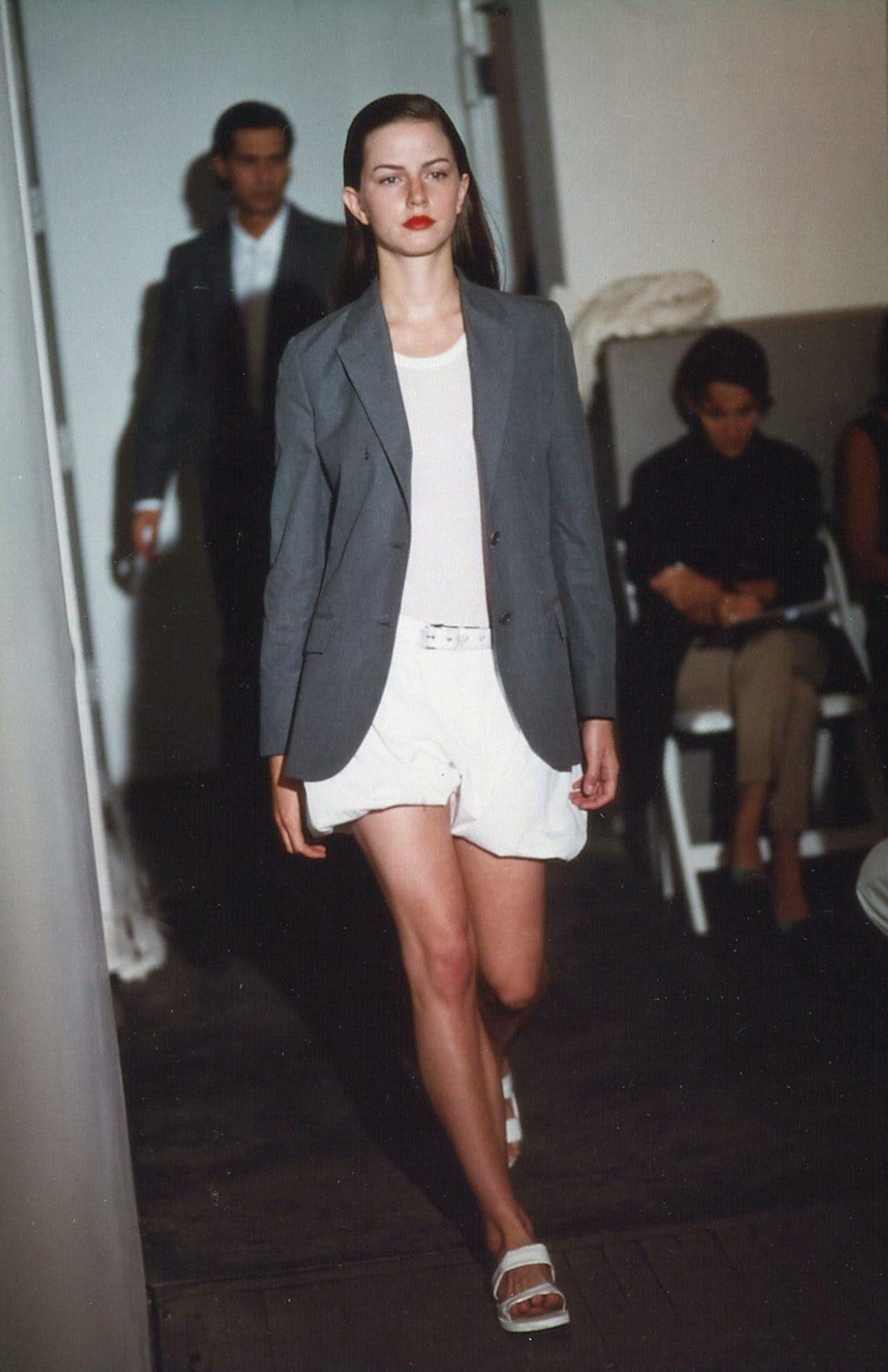
MM: When I need a reset or a jolt of clarity, I inevitably return to the Helmut Lang Archive. To me, Helmut Lang was the quintessential New York designer - raw, sensual, minimal. There was an intellectual sharpness to his work that never sacrificed edge.
I still own the first pair of Helmut Lang shoes I ever purchased: mocha-brown suede. They are objectively trashed, yet I will never part with them.
JG: What makes you immediately open your Notes app?
MM: My never ending to-do list has me constantly opening my notes app to keep track of life. Between my 2 teen daughters, my husband, who also owns his own business, and my collection, life is never boring and the list of to-do’s never ends.
JG: Whose taste do you trust completely?
MM: I have a long standing girl crush on Suzanne Koller. To me she can do no wrong. From her own personal style—that occasionally she will show on the grid or in stories—to her incredible work at Self Service Magazine that has consistently set a standard for intelligence and edge in fashion imagery, to the work she did with Louise Trotter at Caven for a hot minute before Louise was very deservedly appointed at Bottega Veneta.
JG: What’s a tiny daily luxury you can’t live without?
MM: I use Vitner’s Daughter Active Botanical Serum morning, noon and night. The smell is divine, it makes my skin look plump and dewy, and April the founder is a fellow eco-warrior and has similar business principles to me.
JG: What’s on your playlist right now?
MM: Yikes, my playlists are extremely eclectic. Depending on my mood or what I need to get done on a given day I can be listening to anything from Vivaldi, The Four Seasons Recomposed by Max Richter, Irish Druid Folk band Lankum, anything Sinead O’Connnor did with Massive Attack, and my guilty pleasure, the Foo Fighters—even my husband knows I would leave him for Dave Grohl.
JG: What do you collect that’s not clothes, and what does it say about you?
MM: I collect vintage furniture and art by small (aka affordable) artists. I recently purchased the most divine tiny painting by Justin Bradshaw who is represented by my friend Valentina Ackerman of Galerie Sardine - she has the best taste and also introduced me to Isabel Rower. I just bought one of Isabel’s marble-like stone side tables in the most incredible shade of mustard, too.
JG: What’s the object in your house that everyone comments on?
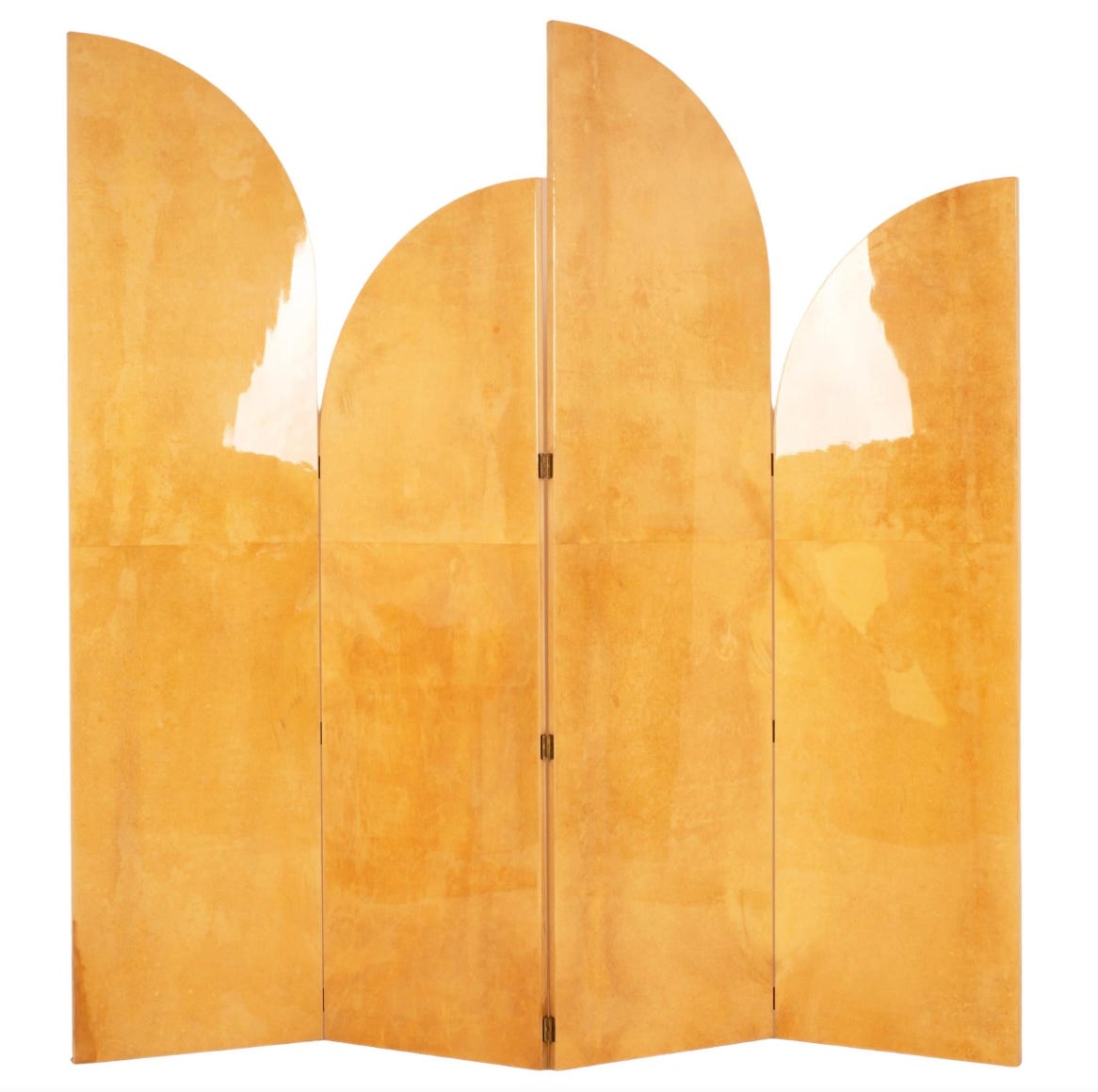
MM: I am a 1stDibs fiend, and when we moved into our current loft, I found a lacquered parchment screen by Aldo Tura that I use as a room divider between our foyer and living room. Everyone comments on it, and my friend Geraldine Boublil used its irregular arches to inspire the mirrors in her new apartment in Paris.
Loved reading about Maria, took a scroll through her website, received a lovely customer service email asking if I had any questions about anything I was looking at, I responded with fit questions and told them I was nervous for my first purchase to be final sale, a real person responded with helpful fit guidance and an offer to make a one time exception if my first purchase didn’t fit the way I wanted. And that’s how you get a customer for life!
such an inspiring, interesting interview. need to go check out her work!