



There is no wrong way to collect jewelry. You begin with instinct and interest, and hopefully your collection becomes a lifetime pursuit. A ring from a bubblegum machine can mean more to the wearer than a Graff diamond. And while you’ll never catch me choosing Baublebar over Bulgari, the subjectivity is what creates not just value, but sentiment. That’s what makes the hunt so thrilling.
I’ve never kicked something sparkly out of bed. But I’ve also never bought a piece at retail or because someone on Instagram wore it. Everything in my collection exists because it tickled something in my brain and heart (and Amex, oops) at once.
There is a difference between appreciating beauty and possessing it. I have held pieces that made my chest tighten and put them back down. Not because they weren’t extraordinary, but because wanting something is not the same as it being yours. I sound woo-woo, but jewelry is emotional for me: I believe that the pieces that belong in my collection will make the case for themselves. My job is to listen.
What follows is my exhaustive, very personal guide to thinking about jewelry as a collector rather than a consumer. My sensibilities, like my collection, are my own — there is no right or wrong here. But I’m going to let you in on how I think, how I buy, and how I’m building a collection over a lifetime.


The Three Families
Understanding What You Actually Collect
Most people think they have “a jewelry collection.” What they actually have is a jewelry box. A collection has a thesis.
When I laid out everything I own that I consider worth insuring, I didn’t see a random accumulation. I saw three distinct families, each representing a different reason to buy and a different kind of satisfaction.
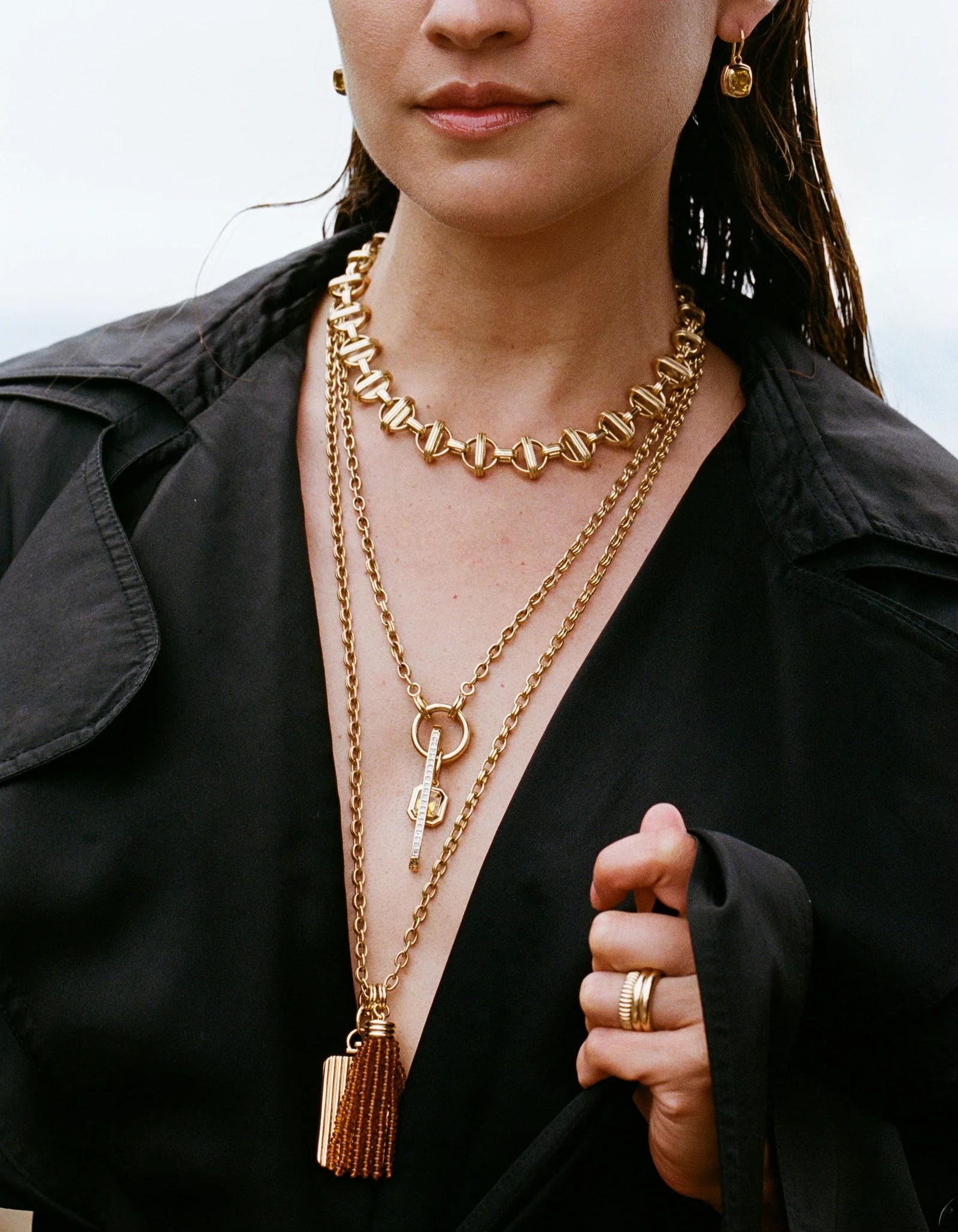
Family One: Artisan Gold: These are the pieces from small, living ateliers—designers I know, people operating more like independent fashion houses than corporate jewelry brands. Sherman Field. EREDE. Lisa Eisner. Lucy Delius. What unites them is the handmade quality, the proprietary alloys, and the fact that these designers developed their own gold colors and their own chain-link constructions from scratch.
Sherman Field spent nearly a year developing their signature 18K yellow gold—a warm, buttery hue that reads almost antique. EREDE uses certified recycled gold with lab-grown VVS diamonds, positioning themselves at the intersection of fine jewelry ethics and Art Deco geometry. Lisa Eisner sources turquoise from long-closed American mines and wraps it in bronze claws that look like they were taloned after a night of Ayahuasca.
Is a python bag just a python bag? Or is it something else entirely when it’s Nancy Gonzalez — whose bags now carry the particular frisson of a designer doing federal time for smuggling the very skins she built her empire on. Is it different when The Row makes yours to order, no logo, your initials blind-stamped inside where only you know they’re there. Or when your friend’s husband sources sustainable American alligator from the Everglades and hand-stitches each bag in a workshop you’ve actually been to. Or when Khaite introduces exotic skins and suddenly everyone acts like they discovered reptile.
It’s the same skin. But it’s never the same bag! The material is the starting point — the provenance, the relationship, the context, the story of how it came to you — that’s what makes it yours. Jewelry works exactly the same way.
When I buy from these designers, I’m not buying a brand, I’m buying a hand! I want to know who bent the wire, who selected the stone, who decided that the hinge on those EREDE studs should have exactly that weight and exactly that click. This mirrors how I approach everything else about The Love List: I want the person behind the thing. The relationship is part of the value!
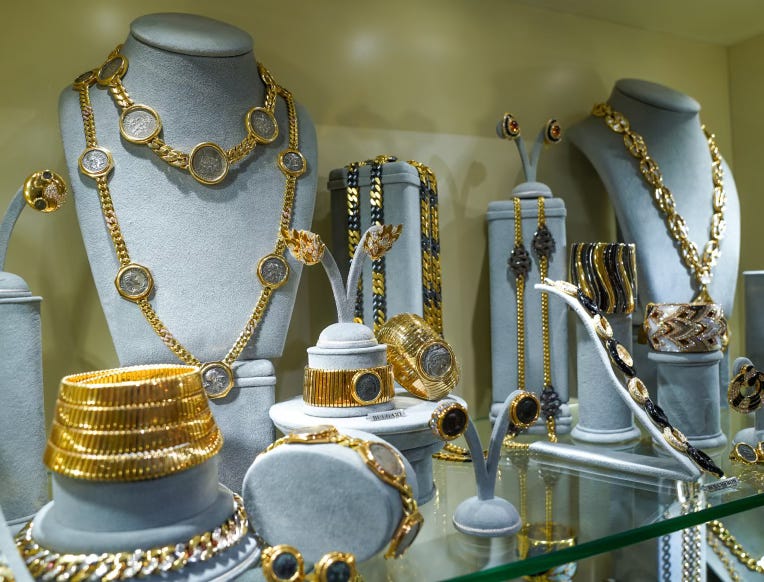
Family Two: Victorian and Antique Estate. The opposite logic applies here. Many of my antique pieces are unsigned, un-branded, and they come from a time before jewelry “designers” existed as a commercial category. A pair of Victorian rose-cut diamond drop earrings with black enamel, circa 1860. A cobalt blue guilloché enamel ring with seed pearls and rose-cut diamonds from roughly the same era. An Art Deco platinum bombé ring fully pavé-set with old European-cut diamonds from the 1930s. Gleefully OTT David Webb turquoise cabochon earrings from the 1970’s.
Nobody made these pieces for a lookbook. They survived 100 to 170 years because the craftsmanship was extraordinary and someone, at every generation, recognized that and kept them safe.


When I hold my Victorian enamel ring, I am holding a technique. That’s what I’m paying for. The hand-engraved shanks, the milgrain detailing, the guilloché enamel that someone spent days applying layer by translucent layer—this is labor that doesn’t exist anymore at any price point.
I like the treasure-hunt intimacy of an antique dealer who knows my eye and sets things aside for me. That relationship is the collecting experience I value. And while there’s nothing wrong with an auction paddle, the impulse and adrenaline of it personally triggers my anxiety.
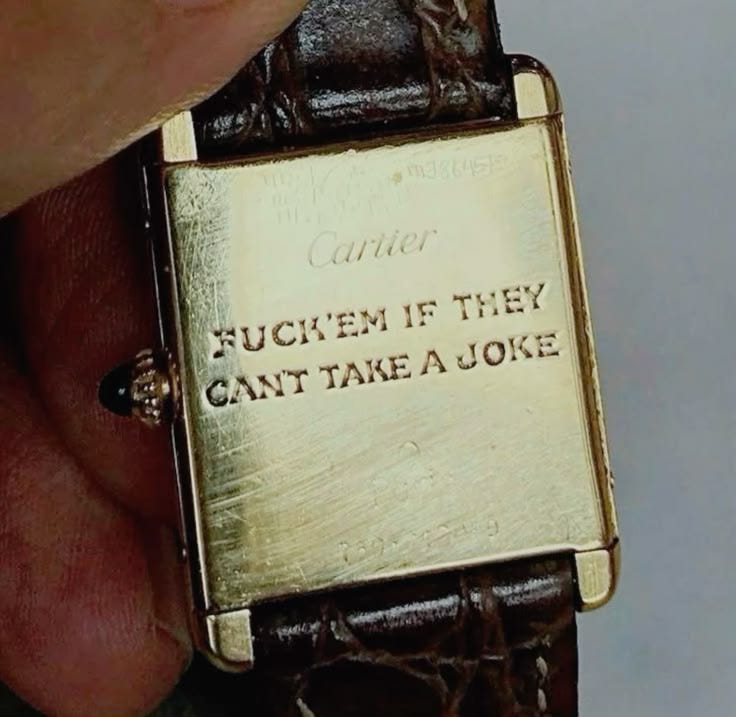
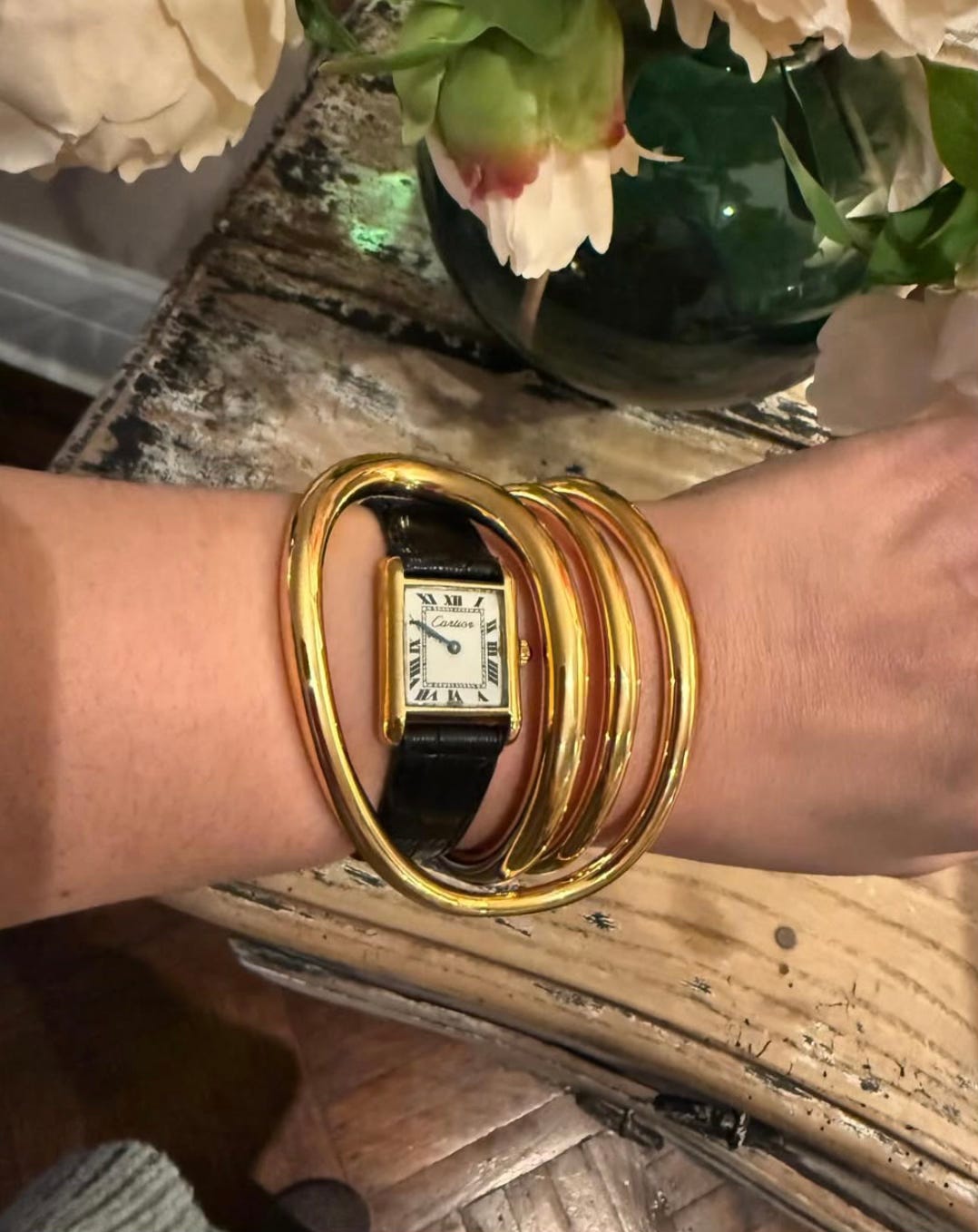
Family Three: Iconic House Watches. The only branded luxury pieces in my collection are all watches: a Cartier Panthère mini in full 18K gold, a Cartier Tank in vermeil, a Franck Muller Curvex in 18K gold. Notice what’s happening here: I let the heritage houses do what they do best: cases, movements, legacy, the cabochon crown, the Roman numeral dial… but I don’t hand them my wrist and my ears. It sort of defies logic, but I promise it makes sense to me. In my head, it grounds my collection in something substantive but easy to clock.
This is an important distinction for collectors! A full Cartier jewelry wardrobe is like walking into a furniture store and buying a living room set. A Cartier watch paired with Lisa Eisner turquoise studs and a Sherman Field bracelet is a point of view.
Trust Your Eye As Much As Provenance
Half of my most valuable pieces are unsigned!
Here is something the big-house jewelry industry prefers you don’t internalize: a signature does not make a piece good. It makes a piece sellable.
My Art Deco platinum bombé ring is unsigned. It has no hallmark inside the band. It was made by a jeweler whose name is lost to history, sometime in the 1930s or 1940s, and it is one of the most magnificent rings I have ever seen—a full dome of old European-cut diamonds in platinum, with milgrain detailing on the horizontal bands that could make a modern jeweler weep.
I bought it from an antique dealer in Carmel, CA for $6,000. Its estimated insurance replacement value is $12,000 to $18,000, pending a formal appraisal. The range is wide because the exact carat weight hasn’t been verified—I estimate 3 to 5 carats total based on visual assessment—and that number will determine where it lands.
Now, if that same ring had “Cartier Paris” engraved inside the shank, it would be a $40,000 to $80,000 ring. Same platinum. Same diamonds. Same craftsmanship. The signature would multiply the price by four or five. That’s the provenance premium, and understanding it is one of the most important things a collector can do. Because when you subtract the premium, you’re left with the object. One isn’t necessarily better than the other, I love jewelry of great provenance as well, but you need to know when the provenance has real value and when you’re just paying for a name.
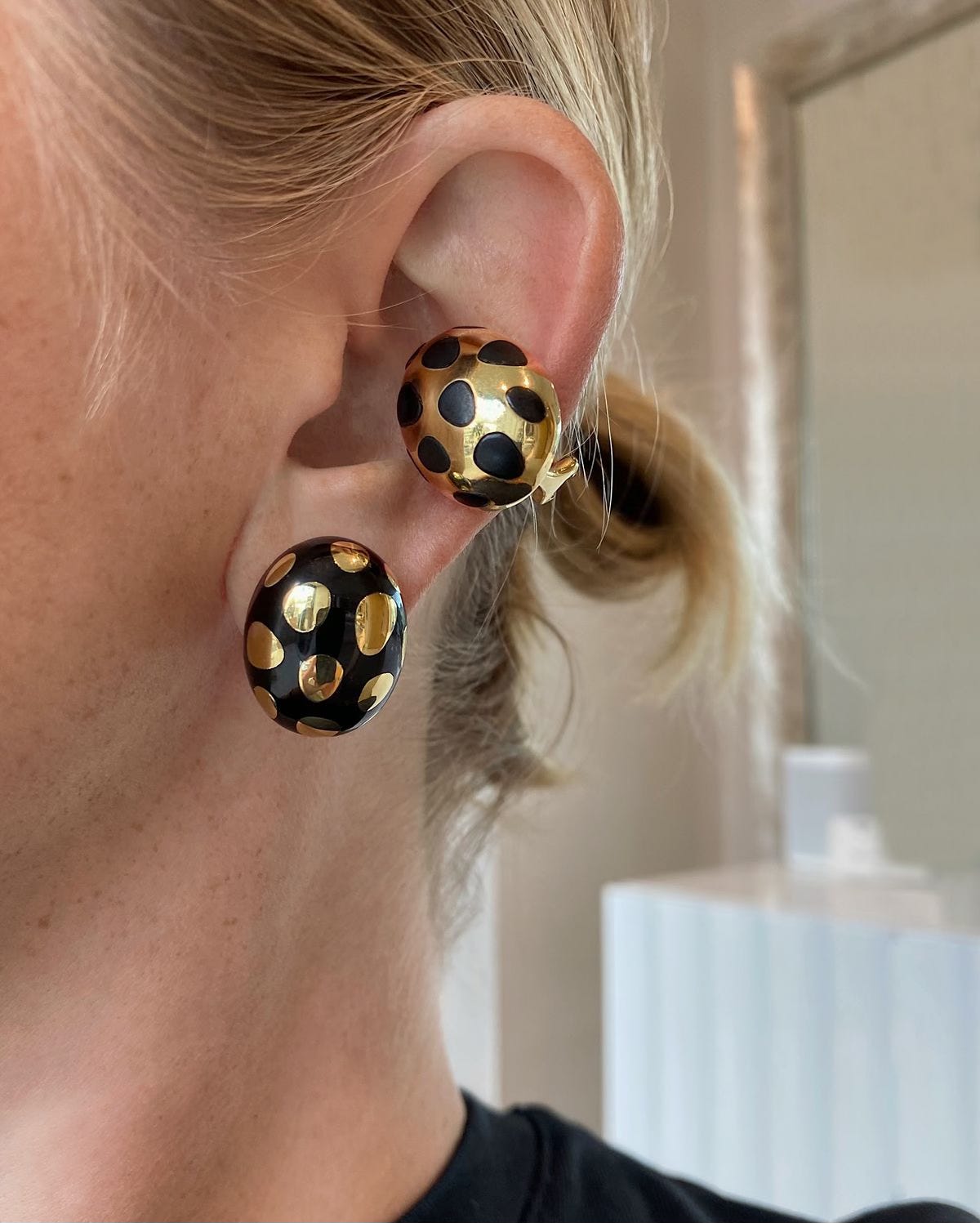
My Angela Cummings for Tiffany positive/negative earrings are the exception that proves this rule. They’re signed, they’re branded, they’re from a discontinued and collectible line. I bought them for approximately $2,500. Their estimated replacement value is $4,500 to $5,000. I didn’t buy them because they said Tiffany on the back. I bought them because the black jade against the 18K gold, in that spotted dome pattern, in inverse colorways, is one of the most sophisticated design moves in American jewelry. Angela Cummings understood the relationship between positive and negative space the way an architect does. I wanted the earrings. The provenance was a bonus!
I think that’s the true shopper’s trick, right? Learn to see the object before you read the stamp. But also don’t let the stamp be the reason you don’t grab a piece you love.
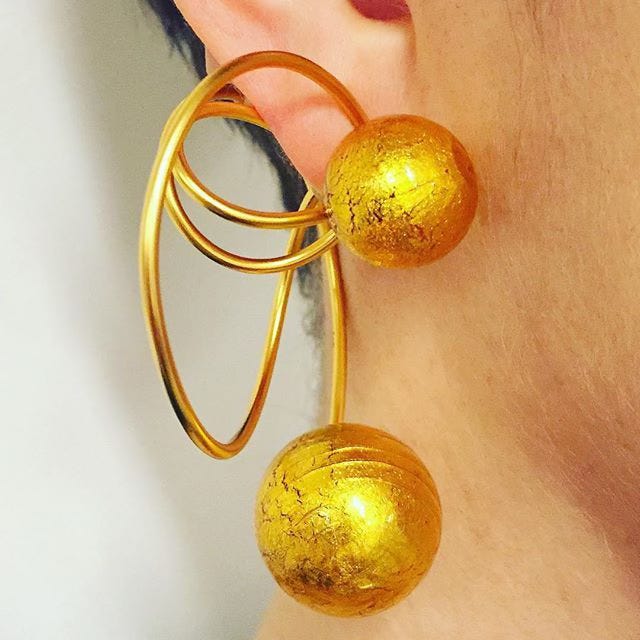
Mixing Eras Without Looking Like a Costume
The material palette is my through line.
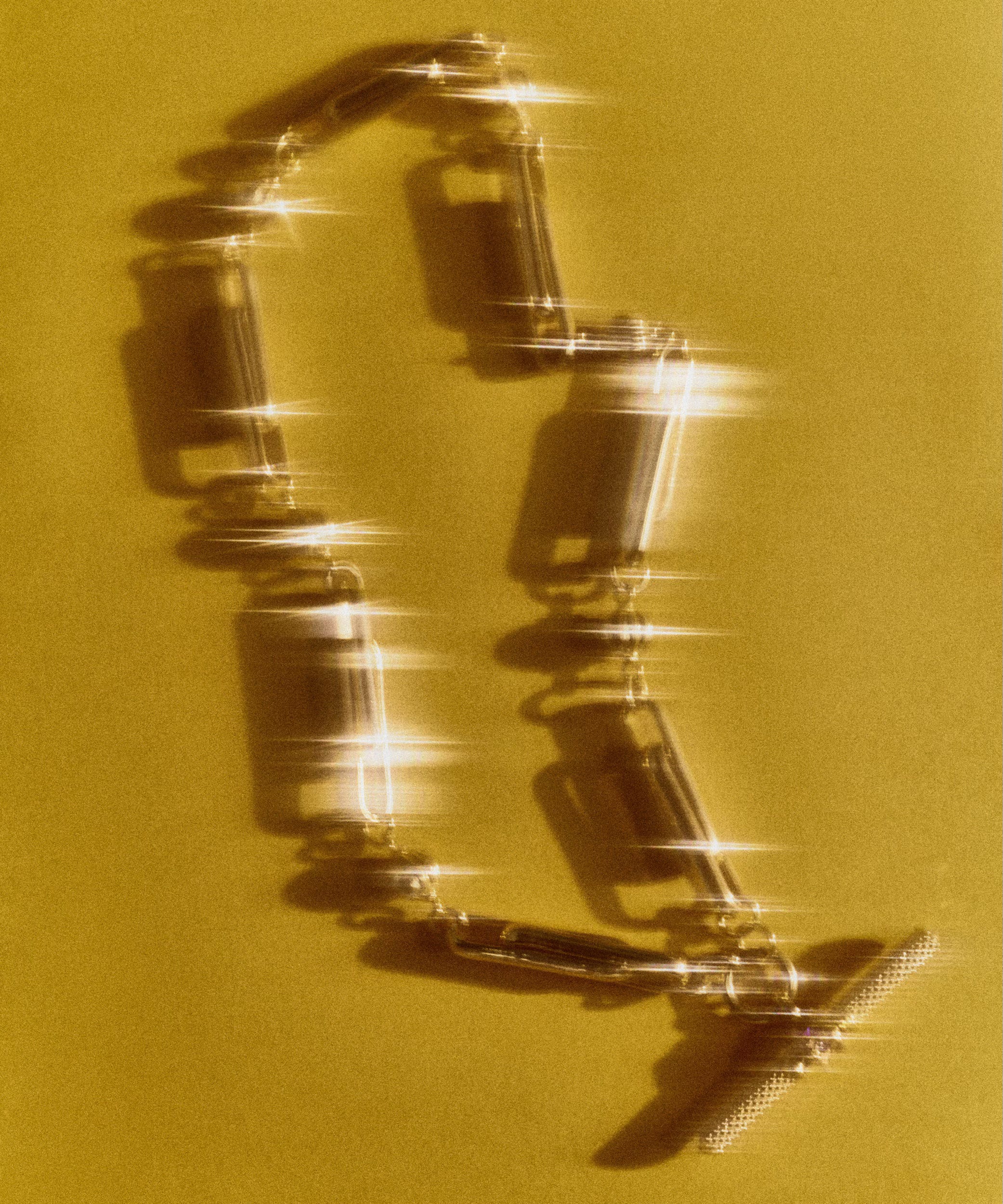
I wear Victorian rose-cut diamond earrings from the 1860s with a Sherman Field 18K anchor chain bracelet made last year. On paper, this kind of breaks the rules. In practice, it is the most interesting arm-and-ear combination I own. The reason it works is material consistency: warm gold, white diamonds, handmade construction. The eras are different, but the fundamental values are the same.
When I look across my entire collection, I see a throughline that I didn’t consciously plan but that my eye enforced: warm gold tones, black and white contrast, and dimensional forms. The Angela Cummings earrings are black jade on gold. The Victorian drop earrings are white diamonds on black enamel on gold. The EREDE studs are white diamonds in ribbed gold. The platinum bombé ring and the white gold cluster ring are the only cool-toned pieces, and they’re both diamond-heavy cocktail rings that exist in their own evening context.


If you want to mix eras successfully, here is the rule I’d offer: pick your metal family and stay in it. If you live in warm gold, stay in warm gold across centuries. If you’re a platinum-and-white-gold person, commit to that. The era can change. The silhouette can change. The designer can change. But the color temperature of the metal is what makes everything on your body look like it belongs to one person rather than five different people who got dressed in the dark.
Can you mix metals? 100%. But think of it like building a wardrobe: you want great jeans, but you don’t want all jeans, all the time, right?
For me, the one exception is contrast pieces. Like a single cool-toned cocktail ring against an otherwise warm-gold hand, for instance, can be the most arresting thing in the room.
How to Buy Well
Price, Patience, and the Dealer Relationship
I have never paid retail replacement value for anything in my collection. Not once. I’m consistently buying at 40 to 70 cents on the dollar of what it would cost to replace each piece today. This is honestly a combination of luck and method.
Buy from resale platforms early and often. The RealReal, 1stDibs, Farfetch pre-owned, and The ReSee in Paris are where I’ve found some of my favorite pieces. These platforms are the great equalizer. Pending condition (and that’s a big one) you are buying the same object that a retail customer pays full price for, minus the boutique experience and the shopping bag.
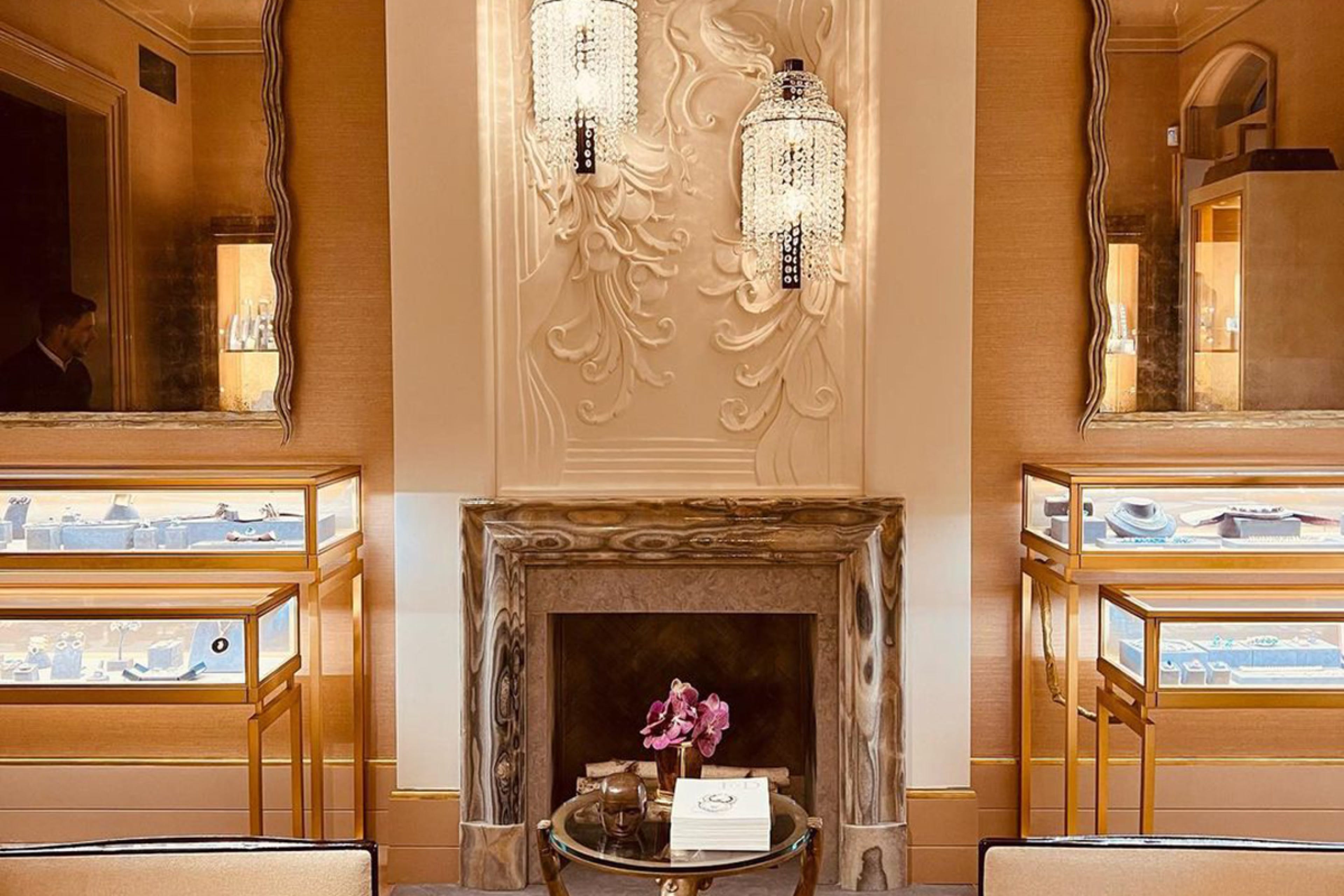
Cultivate one or two dealers and be loyal. That relationship means I get first look at incoming pieces that match my taste. The dealer knows I like bold forms, warm gold, old cuts, and enamel work. They set things aside. You cannot replicate this on the internet. The algorithm does not know you like that, babe! At Richter’s in Palm Beach, Emma Richter immediately clocked my Angela Cummings for Tiffany earrings and instantly got my vibe. I didn’t buy anything that day, but now she knows what I like, we have each other’s numbers, and she’s texting me things she comes across at auction, estates and shows. Do you really think your girls Mary-Kate and Ashley Olsen are just floating into F.D. Gallery and pulling from the case?
Know your designers. I bought my Lucy Delius necklace at a great price because the designer is a friend. I bought some of my Sherman Field bracelets at meaningful discounts, but the first thing I ever bought was full-price before I ever knew Danielle. This is not about extracting favors. It is about existing in a community of people who make beautiful things and supporting them directly, which sometimes comes with the privilege of insider pricing. If you love an independent jewelry designer’s work, buy from them directly, wear their pieces visibly, and tag them when it’s appropriate. The relationship builds from there.
Understand the difference between purchase price and replacement value. Your insurance company does not care what you paid! They care what it would cost to replace the piece at current retail or equivalent market value. This is why you should always log the higher number. Say you have a pair of earrings that were appraised at $7,000 several years ago and you paid $3,500. The replacement value today is $7,500 to $9,000. That’s the number that goes on the insurance policy—not what you paid, not what you could sell them for tomorrow, but what it would cost to find another pair of equivalent quality, era, and condition.
Building a Wardrobe, Not a Vault
If it lives in a safe deposit box, it is inventory!
I wear my jewelry. All of it. Nothing sits. This is important because it shapes how I buy. Every potential purchase has to answer one question: when will I wear this? If the answer is “special occasions,” it had better be extraordinary. If the answer is “every day,” it had better be indestructible. If the answer is “I don’t know, but it’s beautiful,” I walk away.
The way I like to collect, a collection is functional. I’m not a “wait for fancy guests to use the good silverware” person. I say use the good silverware every day. Same mindset for jewelry. Just insure it and be smart about when and where you wear your pieces. If Kim Kardashian has taught us anything, it’s not to flaunt your diamonds on Instagram.
Think of your jewelry collection the way you think about your closet: you need the everyday pieces (studs, a chain, a bracelet), the occasion pieces (cocktail rings, chandeliers, a serious watch), and the bridge pieces that move between both worlds (a great pair of gold hoops, a diamond drop earring, a vintage brooch that pins to a blazer lapel on Tuesday and a black dress on Saturday). If any of those three categories is empty, you have a gap. A gap isn’t bad, it’s a challenge, it’s a hunt! You have a whole life to acquire these things. Take it slow. Savor it.
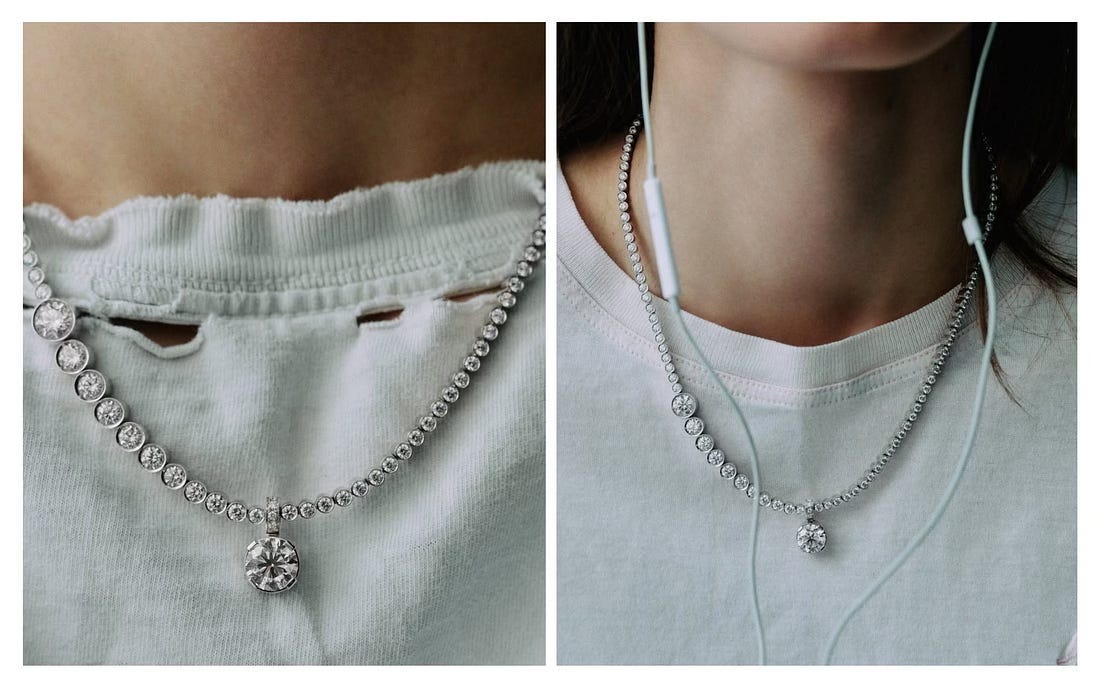
What to Collect Next: The Lifetime View
A collection is never finished. But it should have a direction!
My collection is pretty well-rounded. But here’s what I’m looking for next, some of which is structured as a framework you can apply to your own collection.
The everyday chain. I don’t have one yet. Something heavy, warm gold, handmade, that I put on and never take off. Not a pendant necklace, not a layering piece, not a locket. One chain, maybe 18 inches. This is the foundation piece of any serious jewelry wardrobe, and I’ve been waiting for the right one rather than settling. Sherman Field makes a chain that would be the natural choice given my existing relationship with the brand. But a vintage Cartier or Bulgari chain from the 1970s would add the estate-meets-modern tension that defines my best pieces. I’m holding out for the moment of recognition.


The right-hand ring. Say I have two cocktail rings (the platinum bombé and the white gold cluster), both of which are evening pieces. What I’d be missing is the ring I wear on a Tuesday—a signet, a cigar band, or an interesting thick gold band. This is a piece that a friend could make for me, or that I could find as a gorgeous Georgian or Victorian gold band at one of my antique dealers. It needs to have the weight and warmth of my bracelets but exist on the hand rather than the wrist. I think if you wear a wedding ring daily, you need a right-hand ring of some sort to make it look right. That’s my opinion!
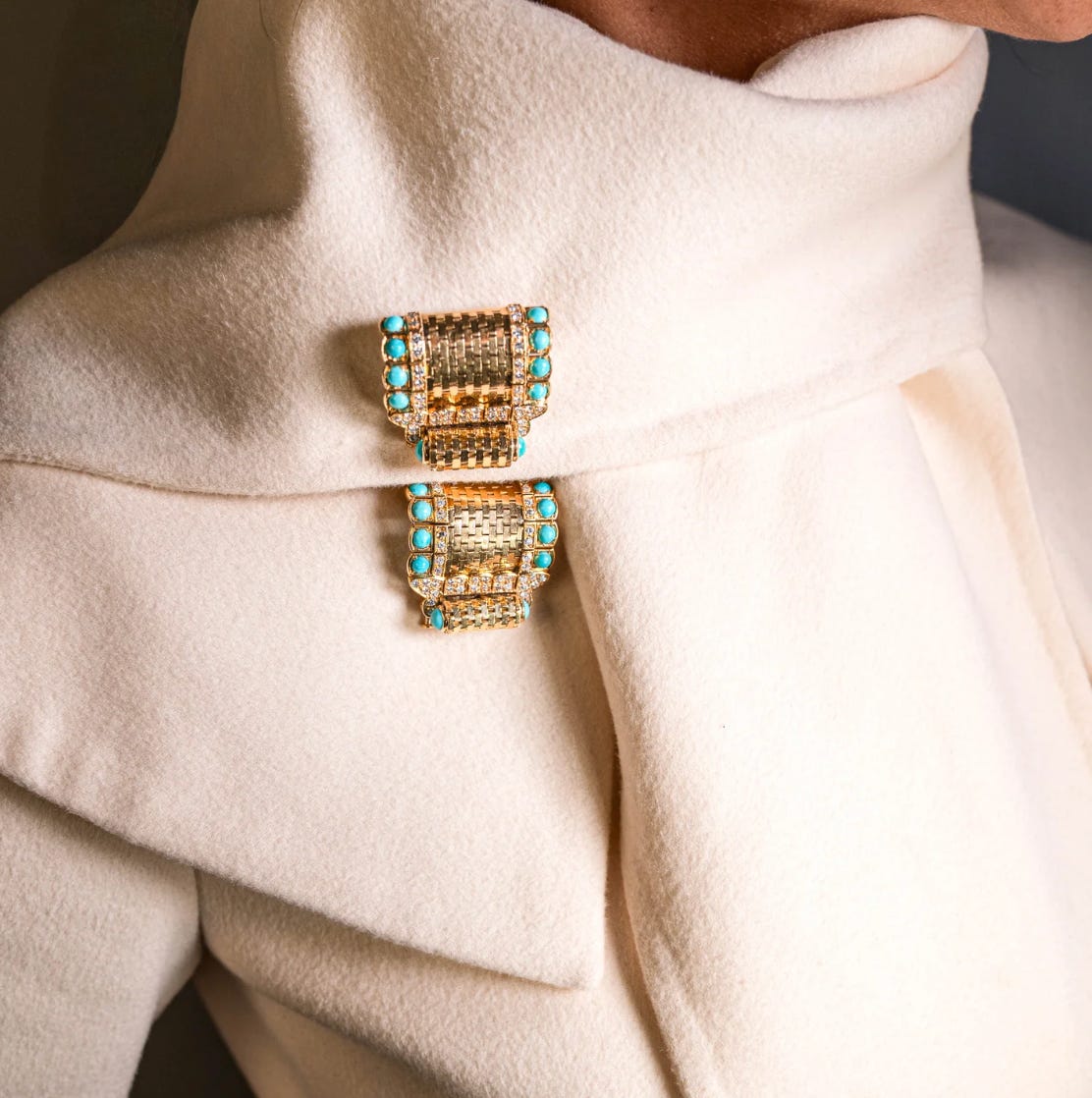
The Victorian brooch worn as a pendant. We have Art Deco’d to death. Murder on the dance floor. She dead. But Victorian? I already love the era. A gold and diamond starburst, a crescent moon, or a floral spray brooch—something I can pin to a chain and wear at the throat? This bridges my antique collection and my everyday gold.
The museum-quality signed antique. Long term. A Castellani, a Carlo Giuliano, a Fabergé, or an early Cartier Art Deco brooch. This is the piece that anchors a collection with historical weight—the one that a curator would want to borrow. I’m not hunting for it. I’m letting it find me. But I’ll know it when I see it, because by the time it crosses my path, I’ll have spent years training my eye on exactly this kind of object.
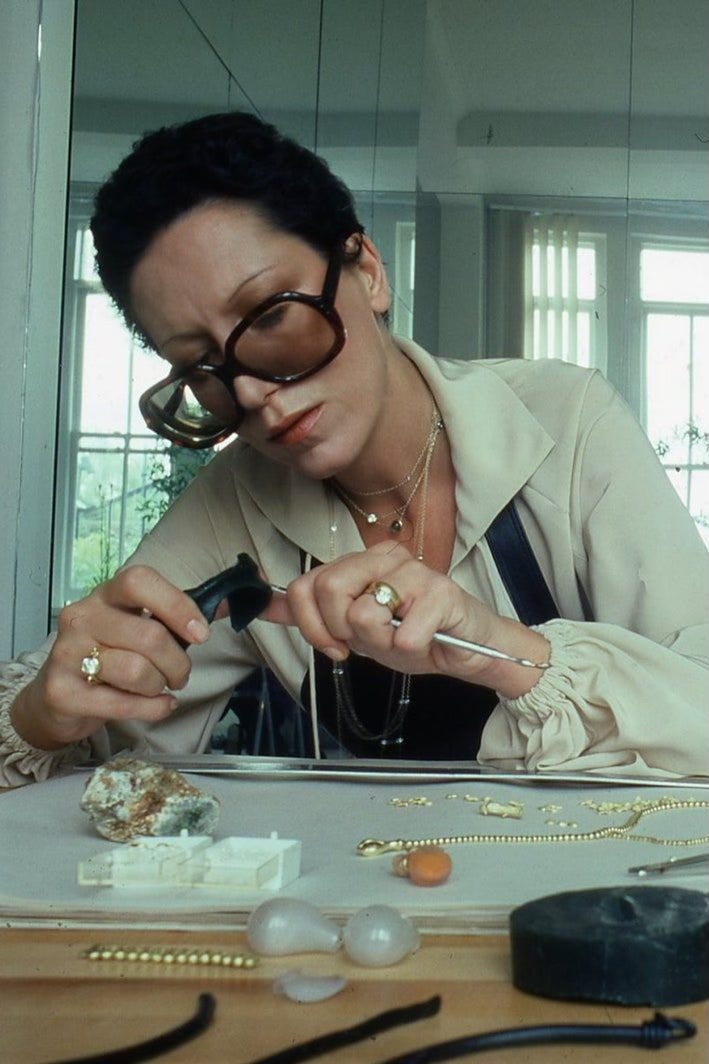
THE TL/DR: MY COLLECTOR COMMANDMENTS
BUY THE OBJECT, NOT THE NAME. Learn to see before you read the stamp. A magnificent unsigned piece will outlast and outshine a mediocre signed one every time. The provenance premium is real—understand it, and decide when it’s worth paying and when it’s not.
KEEP THE METAL PALETTE COMPLIMENTARY: Mix eras, mix designers, mix silhouettes—but stay in your metal family. The color temperature of your gold or platinum is the invisible thread that makes everything on your body look intentional.
NEVER PAY RETAIL IF YOU CAN HELP IT: Resale platforms, estate dealers, designer relationships, and patience will consistently get you the same object at 40 to 70 cents on the replacement dollar. The boutique experience is not worth the markup, unless the boutique experience is the point, in which case, go off!
CULTIVATE DEALER RELATIONSHIPS: Find one or two antique dealers whose taste overlaps with yours, buy from them repeatedly, and let them learn your eye. The best pieces will never make it to the display case.
WEAR EVERYTHING: A piece that lives in a safe is not part of your heart. Before you buy, answer: when will I wear this? If the answer is never or someday, put it down. Unless of course you’re Princess Kate, in which case, what are you doing here girl?
PRIORITIZE CRAFTSMANSHIP, QUALITY AND WEIGHT OVER SCALE: A small, heavy, beautifully made piece will always feel more expensive than a large, light, flashy one. Hold it in your hand before you look at it on your body. This is when you want a fat booty and not an Ozempic diamond.
INSURE YOUR COLLECTION: Your insurance company doesn’t care what you paid. They care what it costs to replace. Always log the higher number. Get the pieces with uncertain carat weights professionally appraised. Protect the collection you’ve built.
Please show the bombe ring.
P.S. I have an antique OMC cluster ring arriving tomorrow. Crossing my fingers on in-person vibes…
I love this so so much, as someone who also feels a special pull towards jewellery. Thank you for articulating this, I feel very similarly about the categories you named, although I will buy contemporary pieces such as earrings that are not necessarily “artisanal” if that makes sense. I also love the idea of the piece speaking to you and collecting slowly over a lifetime.